
2 October 2026
Wind-Assisted Shipping: A Key to Pacific Security and Climate Resilience
share article →
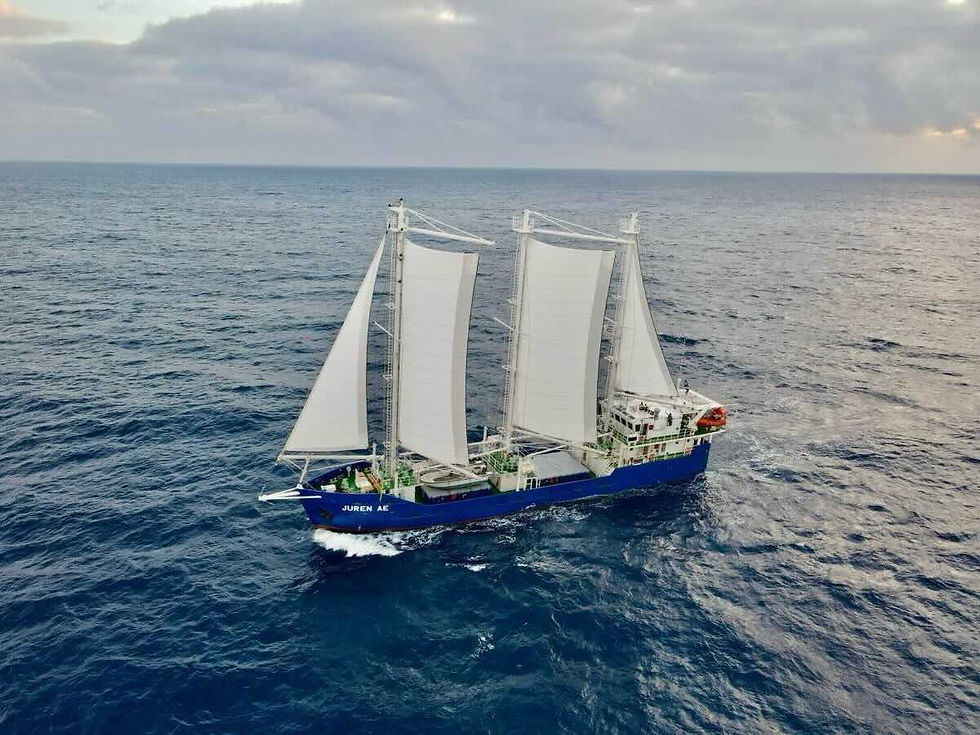
As Pacific island nations move toward wind-assisted cargo vessels, Australia has a unique opportunity to fund a maritime transition that secures both the region and our own shipping.
Andrew Dickson writes in Renew Economy about the critical intersection of maritime security and decarbonisation in the Pacific. Read more on Renew Economy.
The current Pacific security architecture faces a significant vulnerability: a heavy reliance on imported diesel for shipping. This dependency makes island nations susceptible to fuel price spikes and supply chain disruptions caused by global conflict or extreme weather.
The Charter of the Pacific Blue Shipping Partnership offers a solution through wind-assisted propulsion technology. This technology is proven, scalable, and can be retrofitted to existing vessels, providing a way to decouple maritime transport from fossil fuel volatility.
For Australia and the Pacific, investing in wind-assisted shipping is not just a climate action; it is a strategic security measure. By supporting the regional transition to low-carbon maritime transport, Australia can bolster regional stability and ensure that essential goods continue to move even when fuel markets are unstable.
No fluff climate stuff, straight to your inbox.
Our newsletter keeps you in the loop with campaigns, events, research and ways to take action.
More News
29 October 2026
What makes a winning environmental campaign? Six decades of activism hold the answer
Researchers write on The Conversation about what six decades of Australian environmental activism tell us about winning campaigns. Read more on The Conversation.
The research team screened more than 3,700 environmental groups and built a database of 2,139 named campaigns going back to the 1960s. They found that partial success is the most common result. Almost two-thirds (62.5%) of campaigns made at least some progress towards their goal, and about one in five fully achieved it. Victoria's end to native forest logging shows how these partial wins add up. Thirty years of protecting one forest at a time eventually ended the industry.
The study found two things that shaped success:
- Clear, specific goals. Campaigns to protect a particular forest or stop a particular project are easier to win, and their wins are easier to measure, than broad systemic goals. 78% of conservation campaigns had some success, compared with 66% of climate campaigns.
- The right target. Campaigns aimed at banks were the most successful, with 28 of 30 achieving some success. Campaigns aimed at super funds were close behind. Campaigns aimed at politicians did worst, with only 39% achieving their goal in part or in full.
Why it matters for Tasmania: This is encouraging news for anyone campaigning here, especially for the protection of Tasmania's native forests. The research shows that steady, focused pressure works over time, even when individual wins are only partial. It also backs up campaigns that target banks, super funds and specific decisions, not just politicians.
The authors point to the recent High Court ruling on the Mount Pleasant coal mine as an example of a well-designed campaign: a clear goal, a specific decision to challenge, and a community willing to stay the course. They also note that people are more likely to act when they believe action works. That's a good reason to celebrate every win, however small.
29 October 2026
Stand with Generation Justice: Call on the PM to end coal and gas expansion
Generation Justice writes on their campaign page about the urgent need to end coal and gas expansion in Australia. Read more on Generation Justice.
With two UN Special Rapporteurs raising serious allegations regarding Australia's continued fossil fuel expansion, the gap between Australia's climate rhetoric and its domestic actions is widening. This is a critical moment for climate action, especially as we approach COP31.
Generation Justice is calling on Prime Minister Anthony Albanese to:
- Stop approving new coal and gas projects and expansions.
- Immediately end subsidies to coal and gas corporations.
- Develop a national roadmap to phase out climate pollution in a fast and fair way.
Action required: You can add your name to their open letter by 9 November 2026. Sign the open letter here.
23 October 2026
Satellites detect massive methane plumes above Chevron's Gorgon gas plant
The ABC reports that independent satellite monitoring has detected large, persistent methane plumes above Chevron's Gorgon liquefied natural gas (LNG) plant on Barrow Island, off WA's Pilbara coast. Read more on ABC News.
The Tanager-1 satellite, operated by Carbon Mapper as part of the UN Environment Programme's International Methane Emissions Observatory, picked up the plumes on five passes in a row since November last year. The latest, in late August, recorded an average of about 7.8 tonnes of methane an hour. That is well above the US EPA's threshold for a "super emitter" event, and it led to a UN warning to Chevron. Chevron says satellite data comes with "a wide range of uncertainty". It has not confirmed what caused the emissions or whether they have stopped.
The story also shows a gap in regulation. Federal enquiries were sent back to state regulators because methane falls outside Gorgon's federal approval. The WA government said it was unclear what its role was, though its environment department is now investigating. The plumes add to Gorgon's poor environmental record, which includes a carbon capture and storage system that has drastically underperformed and a gas seep into Barrow Island's surface last year.
Why it matters: According to the UN, methane causes about a quarter of global warming. Cutting it is one of the fastest ways to slow warming in the near term. Gas companies often promote gas as a "transition fuel", but leaks like this undercut that claim, and they show that gas emissions can go unmeasured and unchecked when no level of government takes responsibility. For Tasmanians who care about Australia's climate commitments, the lesson is that strong, independent monitoring and clear rules for fossil fuel companies matter no matter where the infrastructure is.
22 October 2026
NSW Passes Landmark Laws for Human Composting
The Guardian writes on the environmental implications of new end-of-life laws in NSW. Read more on The Guardian.
In a significant step for sustainable living and circular economy principles, NSW has passed legislation allowing for natural organic reduction, also known as human composting. This process transforms a body into fertile soil over approximately 60 days, avoiding the energy-intensive emissions associated with cremation and the land-use requirements of traditional burial.
For Tasmania, this highlights the growing importance of finding low-impact ways to integrate human life cycles with the natural environment. As we move towards a more holistic view of sustainability, even our end-of-life choices can contribute to the restoration of local ecosystems rather than depleting them.